Why Artful Moments are Key

Every child is an artist.  The problem is how to remain an artist when we grow up.    – Pablo Picasso
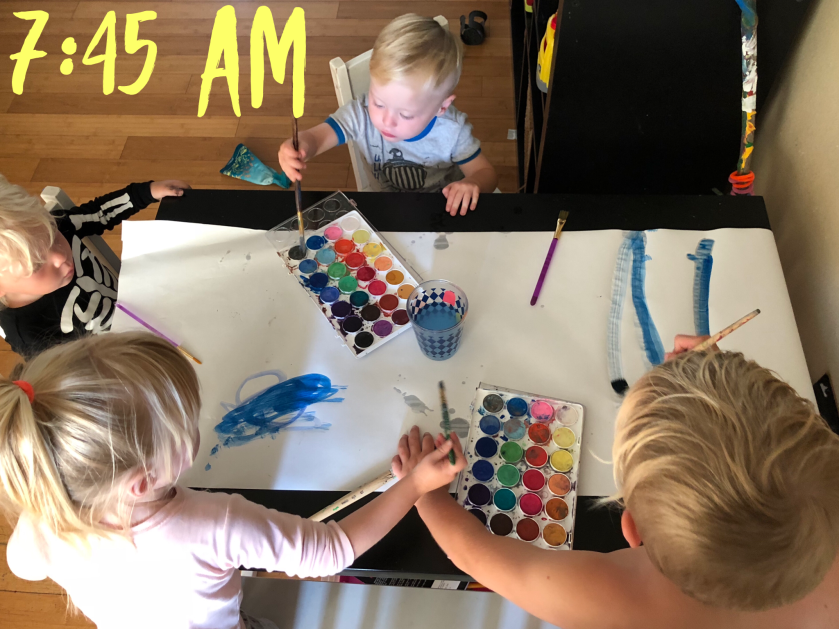
IMG_1969

We all should know how important it is for all generally good humans (kids or adults) to engage in artful moments.  Whether it be performing arts, music, or visual arts, having a creative outlet has measurable benefits to your health and well-being.  It gives you a way to express emotions when you just don’t have the words.

While I wish I truly was a “Renaissance [Wo]man” and a flourishing success in all areas of the arts, the reality is I’m just not.  

In fact, most of my dabbles in performing arts and music are fairly laughable. But, I do love visual arts: doodling, drawing, painting, sculpture, collage.  If I can make it with my hands, I’m game!

For me, art has always been my go-to for self-care.  It’s one way I process my emotions and perceptions of whatever is going on in the world around me.  The social, emotional and mental benefits of art have been huge in my life. It’s important for me to facilitate artful moments for my kids and develop their fundamental art skills so that they, too, can have art in their “tool belt” of self-care strategies.

But art is so much more than a self-care strategy!  The educational benefits of art for kids are equally huge:

  • Fine motor development
  • Problem-solving
  • Analytic skills
  • Spatial awareness
  • STEM concepts

As an educator, I have observed noticeable benefits of experimenting and creating with art.  First and foremost, creating art fosters fine motor skill development. It also develops problem-solving and analytical skills, as well as spatial awareness.

STEM is definitely the buzzword in education these days and art is the great facilitator of Science, Technology, Engineering and Math (STEM).  Art helps develop conceptual and practical applications of math, particularly as they develop visual patterns and use measurements to create various scales.

Art also helps concepts of science and scientific thinking as children experiment with different materials and observe how they interact with one another (and don’t even get me started on the enormous benefits of ceramics in bridging STEM concepts…more on that later).

Artful moments will look different for different purposes, too. Here are 3 general categories I use with my children and students:

  • Experimentation: children interact with different materials without any intended representational outcome.
  • Collaboration: kids work on individual sections of a larger scale project
  • Project Completion: kids follow steps to successfully complete a piece of art

Facilitating artful moments for your kids is important and can be done easily in any space. I’ll be posting easy project ideas and tips for managing art materials that will minimize the anxiety lots of adults experience when mixing kids and art.  But, if we are going to raise generally good humans, we have to let them make art.
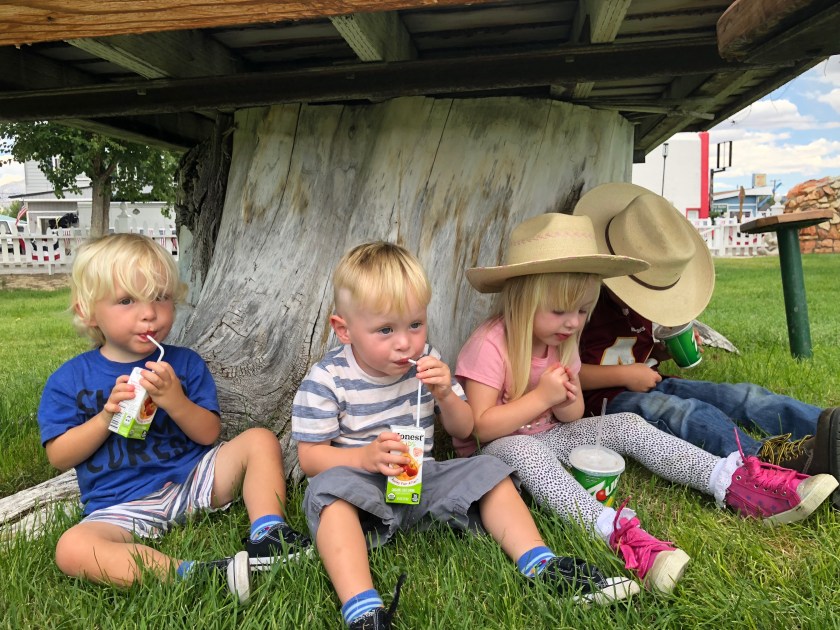
Raising and educating “generally good humans” is what, exactly?

Raising children is an uncertain thing; success is reached only after a life of battle and worry. – Democritus (5th Century, bce)

IMG_1990

I’m not sure.

I’m not sure exactly what defines being “good”, or “generally good” for everyone.  For me it is an aspiration and purpose in my parenting that gives us all a little wiggle room.  We don’t have to be perfect along the way and the outcome isn’t necessarily perfection.

When I had my first son, I went on play-dates with other moms who had kids the same age.  Some of these moms were first time moms and some were not. I found myself, like most new moms do, comparing my son’s developmental benchmarks to the other kids.   I constantly questioned whether or not he was where he should be. Some kids were singing songs in three different languages by the time their second birthday. I remember one child was even playing the guitar and could already add single digit numbers with double-digit sums when he was 2-years-old (and my son was…not). I was measuring my parenting success based on the actions and accomplishments of my child.  

I work with hundreds of children and families every year.  I have not met one parent who did not want their child to be successful in some way. We all want our kids to be successful.  Because if our kids are successful, it means we were successful as parents. Right? Isn’t that what we tell ourselves way back in the dusty storage cabinet of our minds?  If our kids are successful on whatever path they take, then we can pat ourselves on the back at the end and say it was a job well-done. But what does success actually mean? Therefore, this can’t be the way we determine if we are parenting well or not.

So, if our kids’ successes are not the measuring stick we should use to reflect on our parenting, then maybe we should focus on raising them being good people.  You know, the kind of people who do the right thing, make others feel good about themselves and have a positive impact on those around them? I know that if I could raise and educate kids to do that, I would consider my influence successful.  

However, the goal of being “good” puts a lot of pressure on all of us to be “good” all the time.  And while that’s definitely worth striving for, it’s not reality. In discussing it with other parents, we all seem to agree that if we could raise “generally good” humans, everything is going to turn out just fine.  

Striving to raise “generally good humans” means we are willing to acknowledge imperfections, and dare I say it, flaws, in our kids’ behavior, emotions and perceptions toward the world around them.  When we can take a step back and realize these holes in our kids’ goodness exists, then we can address it and modify it. Setting the goal for kids to be “generally good” leaves some room for them to face adversity and personal challenges. It is something for them to overcome and reflect upon.

So how do we know if our kids are generally good humans?

At the end of this run on parenting, I want to be able to answer yes to the following questions about my kids:

  • Are they kind?
  • Are they respectful?
  • Do they make safe choices?

It’s a simplistic system for parenting and it lends itself to shortcomings.  I know.

When I was growing up, my dad always said (usually when I disagreed with a parenting restriction he and/or my mom placed on me): This is the first time [we] have been parents, so we will probably make mistakes.

Raising “generally good humans” gives me some breathing room as well because, frankly, I don’t parent perfectly all the time.

So, if my kids are generally good humans, everything is going to be just fine.